

Food: a theological and spiritual concern (Part I)

Food is the most simple, basic need and concern; food is a genuine desire of humankind. All Creation needs food before and above anything else. Food is the only earthly need to which the Bible constantly refers. But food does not just respond to material needs: it also bears a spiritual and transcendental value. In the “Our Father” we pray for “our daily bread”, as a gift of God to be shared in togetherness and solidarity.
The bread of the Eucharist, offered for all in immolation, makes visible the incarnation of the Word of God through the symbol of food. The multiplication of bread indicates, among others, the common responsibility to provide food for all (“give them some food yourselves” (Mt 14:16)). Food security for all is a paramount moral imperative. The equal dignity of every person entails the equal right to food for everyone. The right to food responds to an ethical motivation: “give the hungry to eat” (Mt 25:35), intrinsically linked to the defence of human life. Food is the fruit of Creation, which is itself a gift of God.
Mankind must respect and take care of Creation like stewards, for the common good of the human family. Human work is commanded to accomplish this duty and necessary to ripen the fruit of Creation.
A biblical approach to food
The Bible shows us that mankind must eat to live. This dependence on material food is a sign of our inconsistency as well as a call for us to nourish ourselves with God, especially His will (Jn 4:34), which only has consistency. Food is considered as a gift from God: “I give you every seed-bearing plant … and every tree that has fruit with seed in it” (Gen 1:29ff ), and all living creatures to be your food (Gen 9:2–3). But if food is a gift from God, it is equally true that we should feed ourselves with the fruit and plants we grow, the animals we raise and that belong to us, namely, the fruit of our efforts (Gen 3:19), the work of our minds and our hands (Deut 14:29).
We produce enough food to feed the world, but one in eight people still go hungry. This illustrates the risk that exists since the beginning of the separation between the divine and the human, to use the food to excess and fall into poverty (Prov 23:20ff; 21:17). Even worse, mankind may use food selfishly and fall prey to luxury (Am 6:4) or even get to exploit the poor (Prov 11:26), forgetting that all food is a gift from God, and combined with good times at work (decent work), together they account for a substantial part of human happiness (Eccles 2:24).

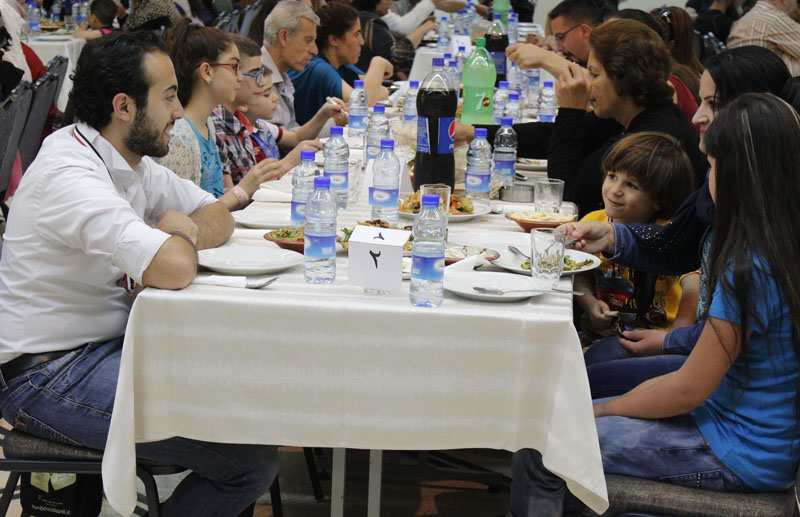
According to the Gospel, the golden rule for access to adequate nutrition is also to leave it up to providence (Mt 6:11) and each day to ask for daily bread from the Heavenly Father in our prayers (Mt 6:11). Access to adequate nutrition assumes a decisive social dimension in the blossoming of individuals and strengthening solidarity ties among families and other human circles. Indeed, access to food allows us to meet each other on a regular basis (Ps 128:3), in an environment with family or friends – around a table, calabash or bowl – to share meals and wonderful times, thanks to divine generosity and human efforts. And on this occasion, we should give thanks to God (Deut 8:10), who magnanimously distributes bread (Mk 7:25–44). This helps us realise and understand that food is not just a commodity for consumption. It has an important and often a sacred role in building compassionate and reconciled communities “where we who are strong have an obligation to bear with the failings of the weak, and not to please ourselves” (Rm 15:1).
Therefore, refusing access to daily bread – a gift from God and the fruit of human labour – to a person or group of people who are disadvantaged constitutes an attitude of disrespect for human dignity, which as well as creating social inequality is also an affront to Jesus (Mt 25) and the poor, and an act of contempt towards the community (1 Cor 21–22). In the same vein, the Fathers of the Second Vatican Council affirm: “a man who is hungry needs not only material bread, but also dignity and meaning to life”, so refusing to provide what is indispensable for those in extreme need is depriving them of a fundamental right. And as a provocation to those who govern the world they warn: “Feed the man dying of hunger, because if you have not fed him, you have killed him” (GS No 69).

The List of Contributions Received by Caritas Vietnam
The list of 2026 contributions to the Caritas Vietnam general charity fund
The list of 2025 contributions to the Caritas Vietnam general charity fund
Latest project information





Copyright © 2018 by COMMISSION on CHARITY and SOCIAL ACTIONS - CARITAS VIETNAM
Total visits: 36,444,459